
In 2023, plans to demolish Maidstone’s Heather House and replace it with a new community hub, including 11 new-build homes on the site of a former Royal British Legion Pavillion, were confirmed.

By the latter half of the year, Chartway Civil Engineering had been appointed by Maidstone Borough Council to undertake the scheme, bringing Hydro WMS on as supply and install sub-contractor. Through this appointment, Polypipe Civils & Green Urbanisation (Polypipe CGU) were enlisted to provide product and design support, alongside the Environmental Protection Group (EPG) for the project.

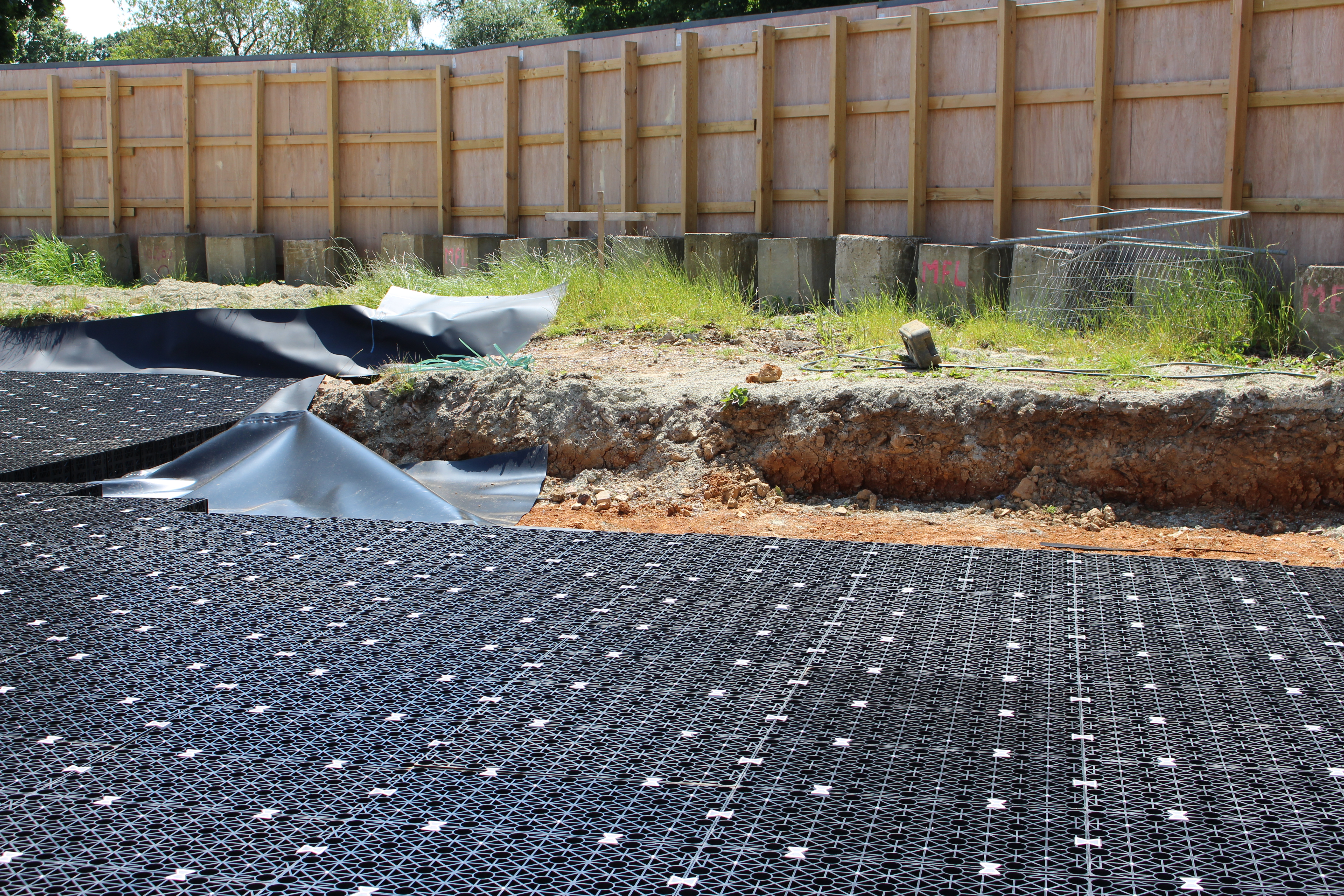
“Our involvement in this project began in February 2024, when we received an initial enquiry for a structural calculation,” Nathan Burns, Specification Sales Manager at Polypipe CGU, said, “in the weeks following, we worked closely with EPG to provide the relevant calculations and designs for our solution – which, for this sub-base residential job, comprised of six Permavoid attenuation tanks in trafficked areas to provide source control and storage.”
IMG_5164.JPG

George Hudman, SuDS Engineer at EPG, said: “This was a shallow site with a  limited construction depth, so Permavoid 150mm was utilised across the site, primarily to fulfil the surface water attenuation requirements for the development, with double-stacked (300mm) units in some areas – a perfect solution, allowing the system to act as a sub-base replacement.

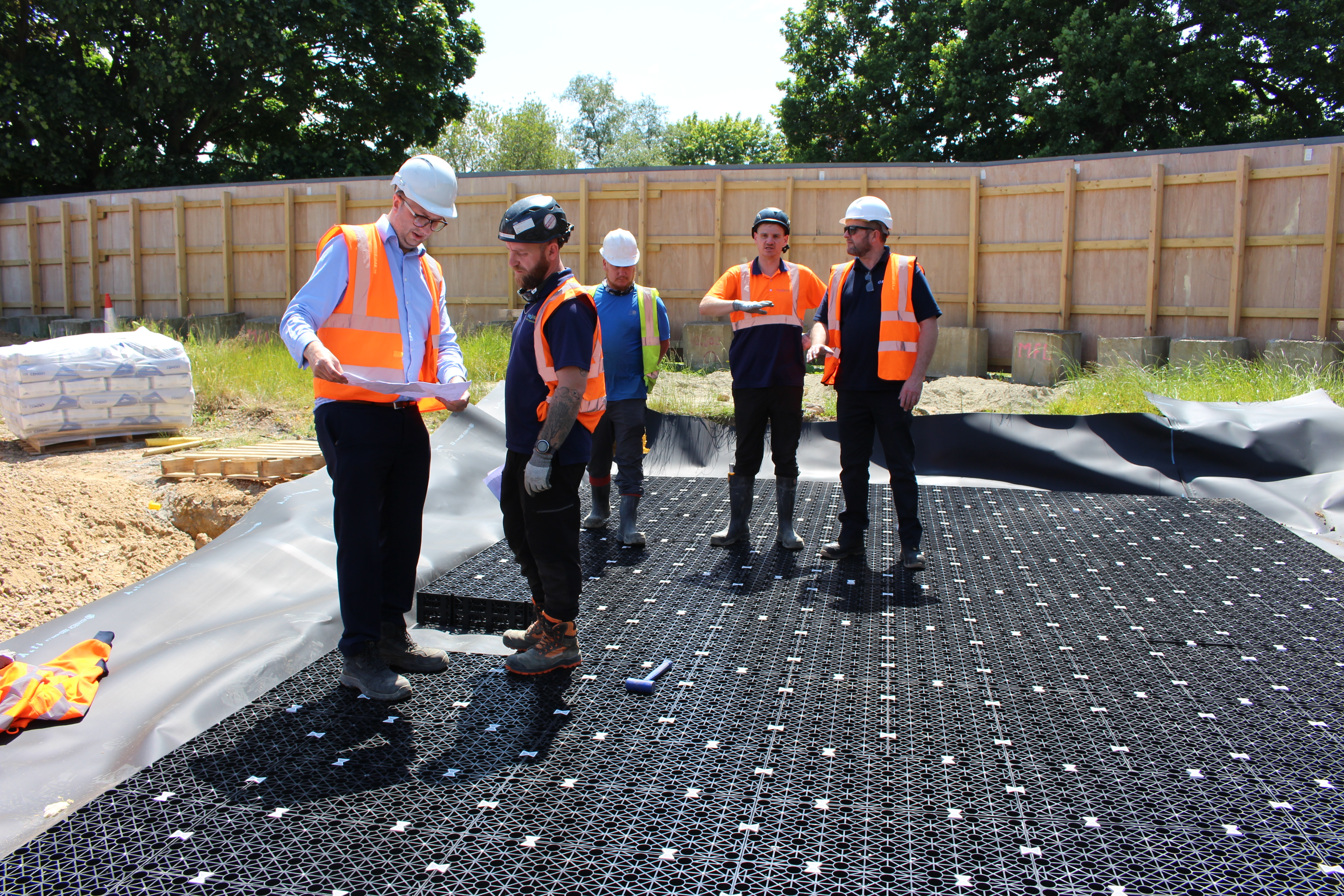
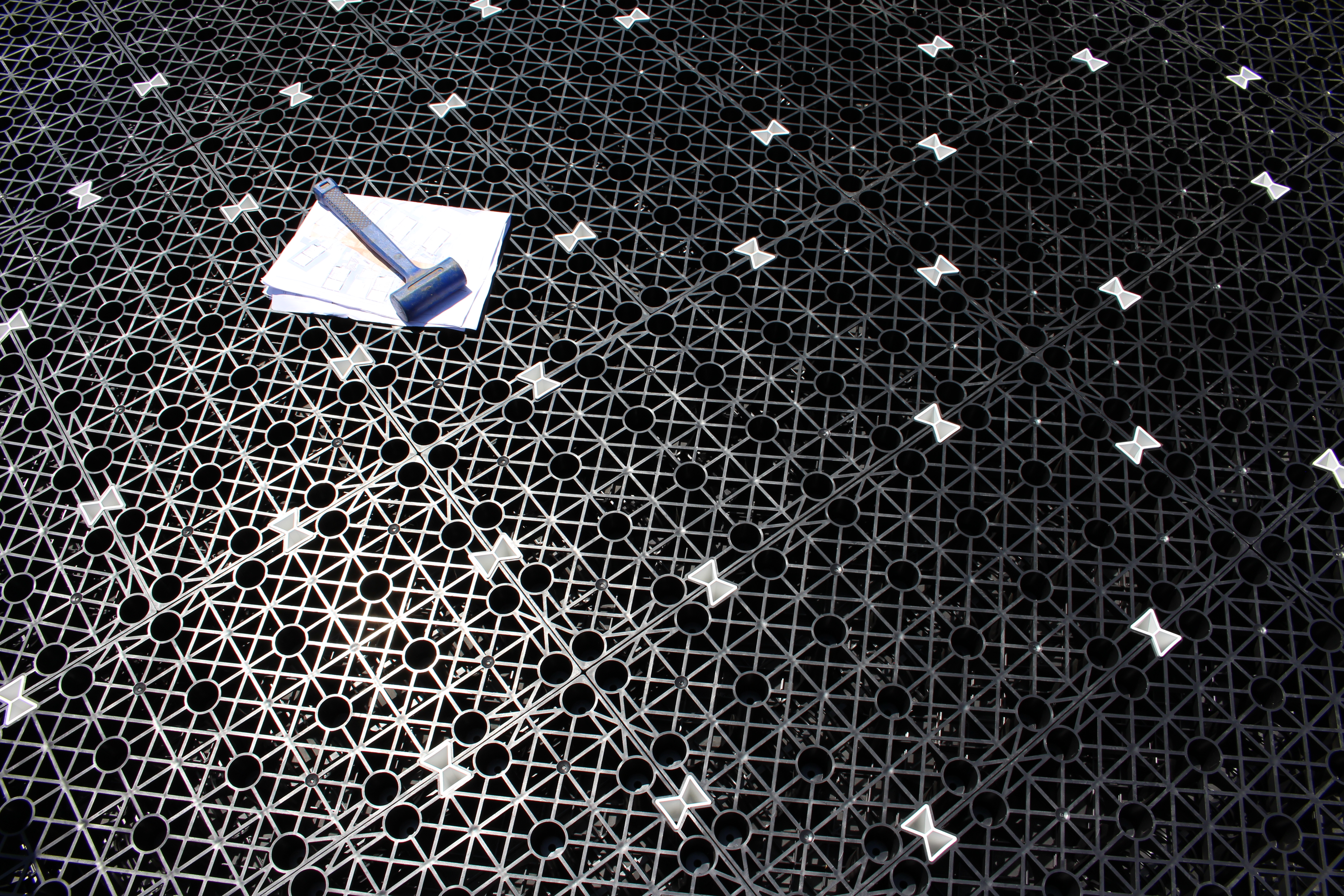
“Permavoid units are connected via structural clips, forming the structural raft which allows traffic loads to be spread across the whole system. This, in turn, allows the Permavoid to be installed at shallower depths, compared with traditional geocellular storage units.”

Nathan added: “By using the Permavoid system installed beneath a permeable surface, we were also able to incorporate our proprietary treatment geotextile, Permafilter, to encapsulate the raft. This enabled us to provide surface water treatment of hydrocarbons and roadside pollutants at source, rather than having to rely on an end of line interceptor.”

IMG_5176.JPG

Graeme Richards, Sales Manager at Hydro WMS, said: “We have extensive experience with the Permavoid system, so we were delighted to install the Permavoid 150 geocellular units for this scheme.

“Firstly, we installed the protection fleece and 1mm geomembrane which was wedge-welded in accordance with CIRIA requirements to provide warranted watertight tanks. The design also called for the installation of flow control chambers that were compatible with the Permavoid system, which we supplied and integrated into the tanks. The installation of these flow controls and check dams needed careful control on levels and therefore required close liaison with Chartway to ensure the attenuation was constructed as per the design. Similarly, the Permavoid geocellular units were installed as per the Polypipe CGU’s requirements and the upper surfaces of the tanks were covered with Permafilter geotextile to provide hydrocarbon capture and treatment.

“As an installer, we are always reliant on the teamwork and professionalism of the contractor and Chartway excelled in this. This sort of approach is somewhat more involved than when working with a traditional attenuation tank and is particularly important when installing an innovative design like this one, and Polypipe CGU also excelled with good communication and timely deliveries, which were particularly useful as site space was a challenge. We look forward with working with both Chartway and Polypipe CGU on future schemes.”