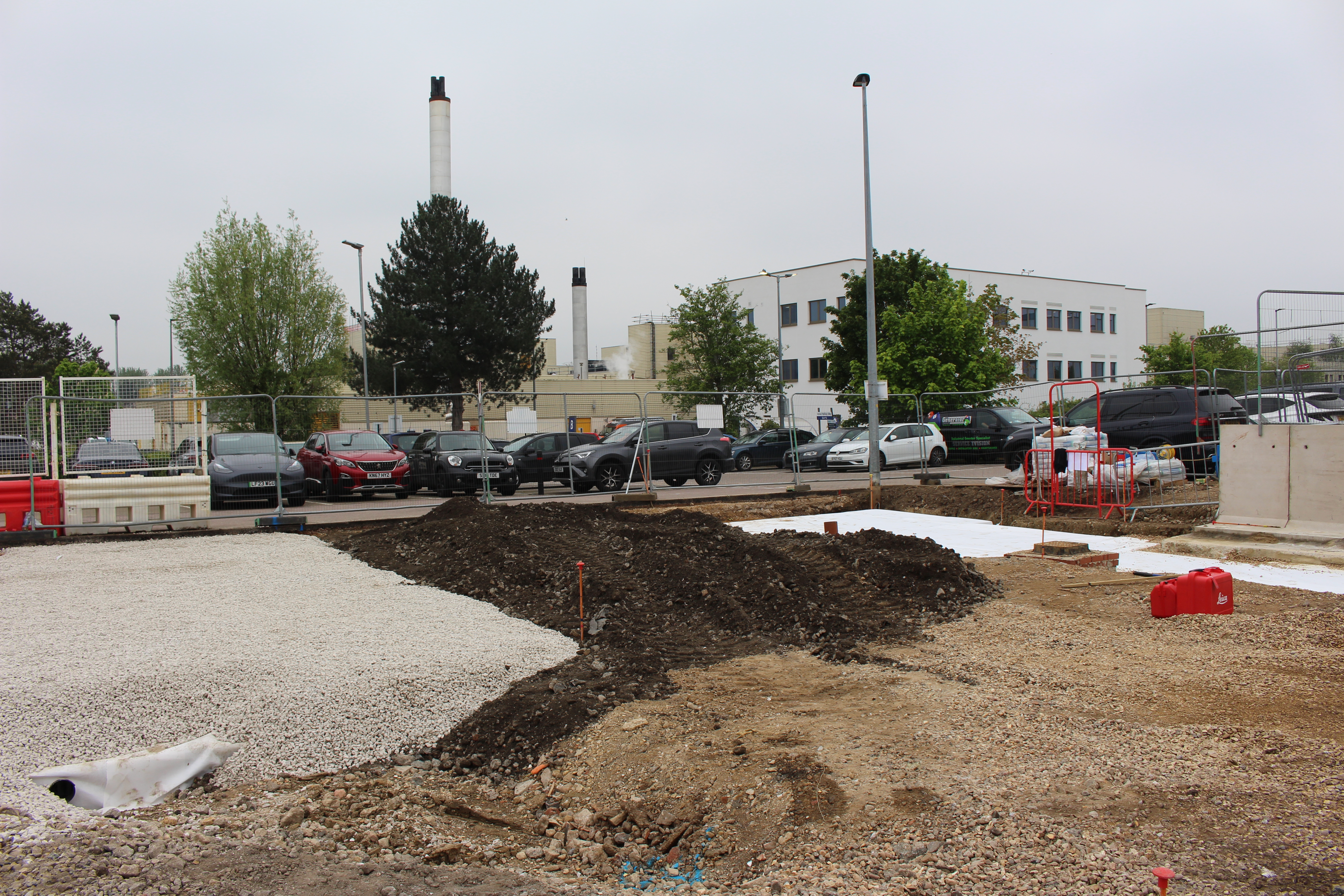

In 2022, work started on the construction of Milton Keynes University Hospital’s new Radiotherapy Centre – a brand-new facility ensuring that patients will no longer have to make significant journeys to receive treatment at neighbouring hospitals. As part of this project, Morgan Sindall – the main contractor – were tasked with the construction of a new 53-space car park.

When Andrew Langston, Business Development Manager at Keytec Installation Services, was briefed on the project in the early part of 2024, he was asked to look at the scheme’s design as there were issues highlighted with hydrocarbons. Working alongside Nathan Burns, Specification Sales Manager at Polypipe Civils & Green Urbanisation, as well as the experts at the Environmental Protection Group (EPG) and BDP, a solution was found using Polypipe CGU’s Polystorm and Pemavoid products.

“This was a project that gathered momentum very quickly,” Andrew said, “My involvement began in early February and the installation happened in April, so it was a speedy turnaround of about eight weeks in total. In this time, with great collaboration, combined technologies and the benefit of flexibility of systems, we developed the scheme to overcome the constraints and appease the engineers in regard to how we would deal with the hydrocarbons within the attenuation tanks."
IMG_4995.JPG

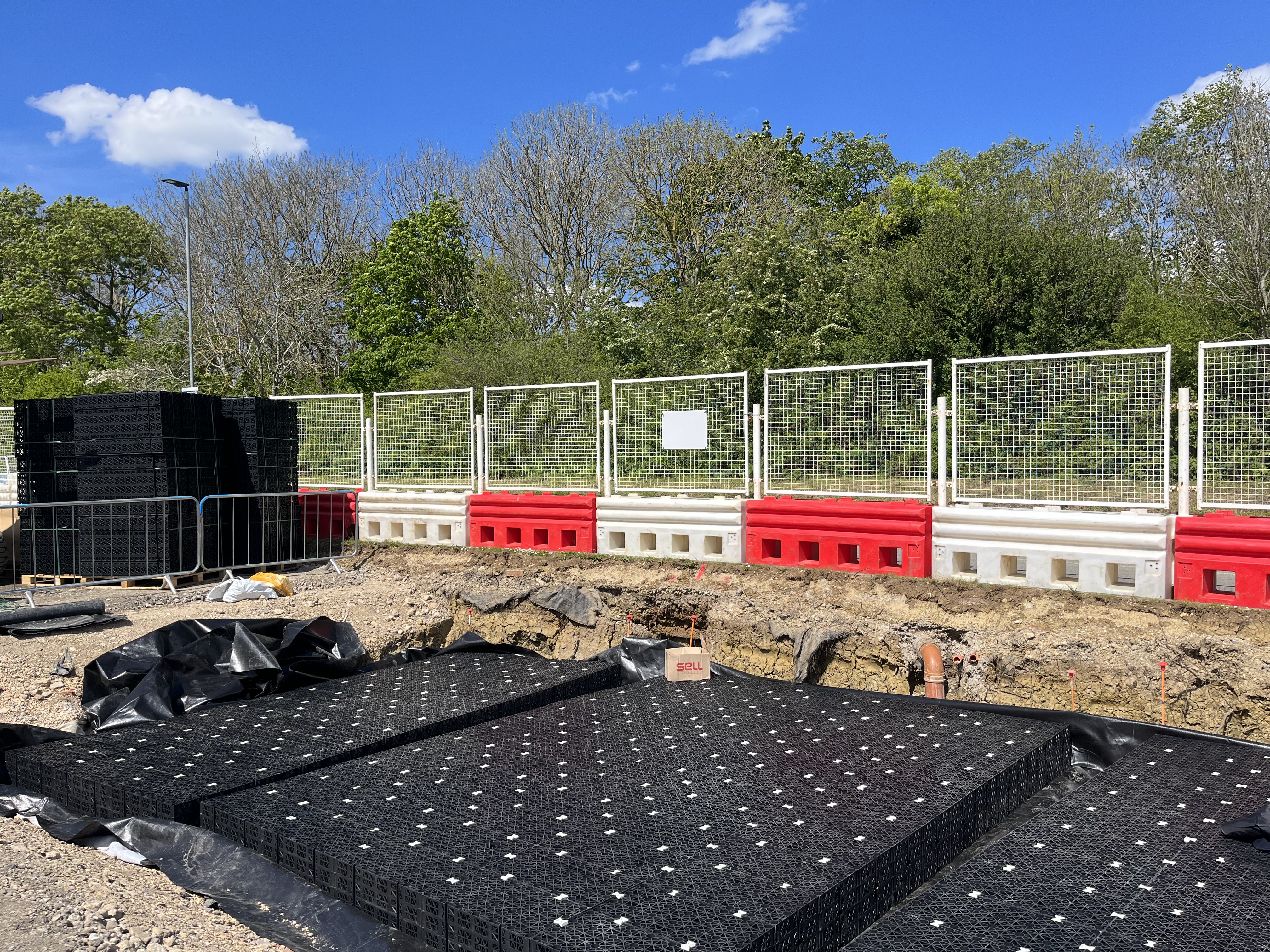
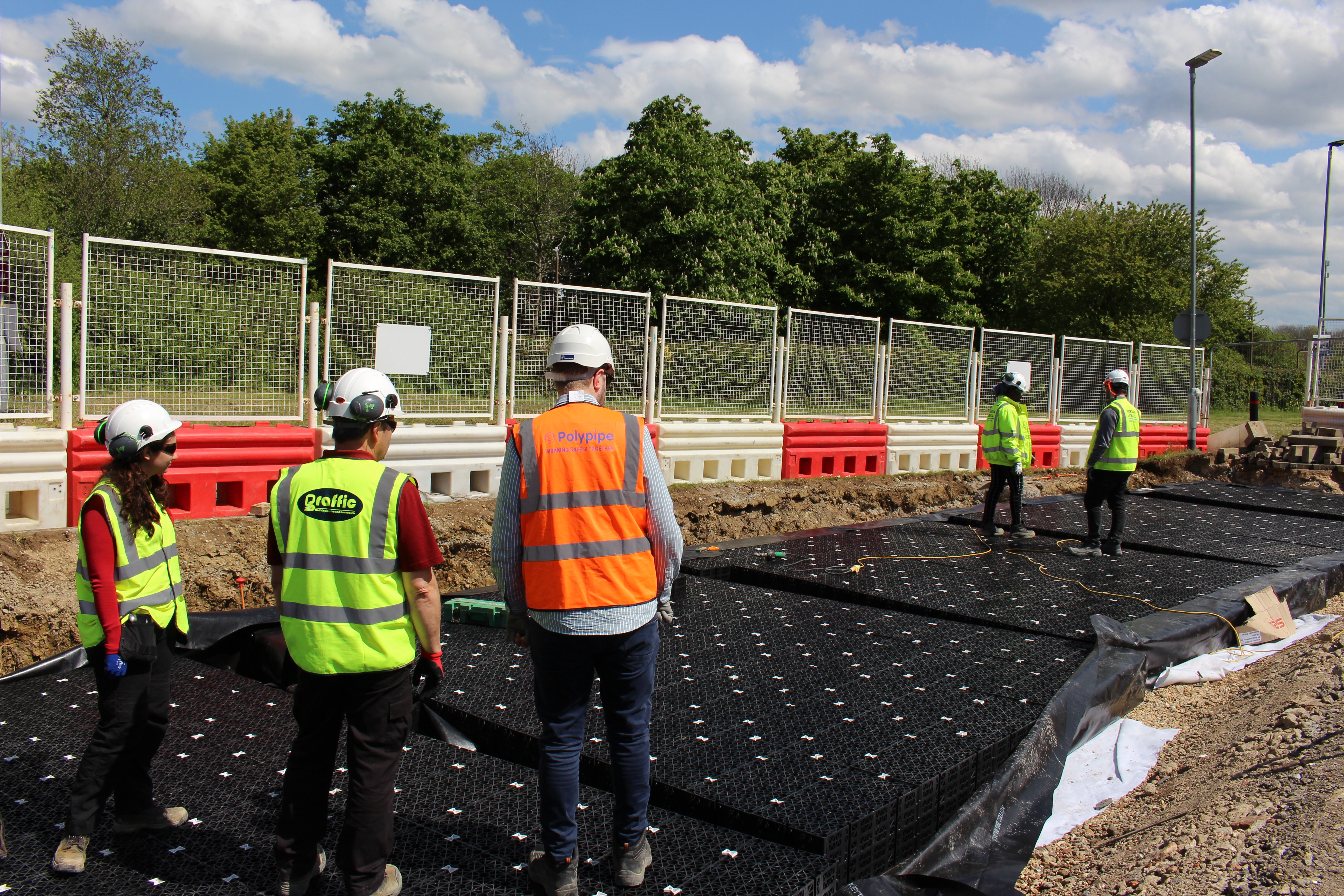
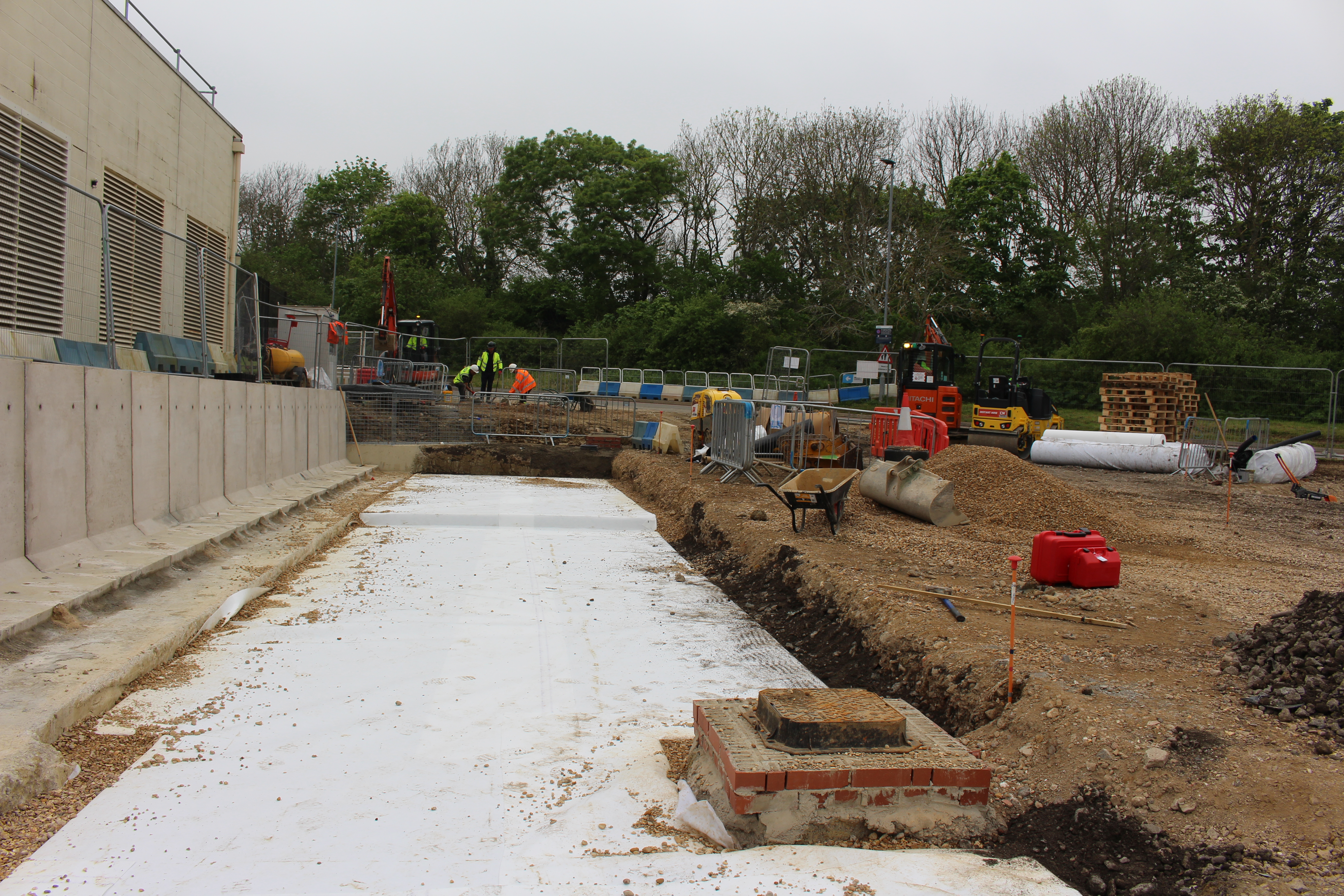
“Our solution involved using Polystorm to create a 135.44m³ storage volume tank, which would attenuate the water collected from the surrounding roadways, and this required the implementation of Polystorm Biomat units to treat the associated hydrocarbons and road pollutants,” Nathan said, “At the north end of the car park, the tank had an 800mm depth (two layers of Polystorm), while a depth of 400mm (one layer of Polystorm) was used for the rest of the tank in order to meet the storage requirements and work with the gradient of the car park at finished level. Polystorm Access turrets and Polystorm inspection crates were also used to allow for increased visibility and access for maintenance purposes.

“Permavoid, with its super strength in shallow applications, was used to create four tanks to attenuate water from the car park areas via infiltration from the permeable surface. To do this, Permavoid 150mm was stacked in two layers to meet the storage volume requirement, with a layer of Permafilter treatment geotextile sitting on top of the tanks to treat the water.”

IMG_5106.JPG

“This was a tricky project,” George Hudman, SuDS Engineer at EPG, added, “there was a much deeper Polystorm tank and then, nearer the surface, it had the Permavoid, so there were a lot of discussions about the depths of each tank compared to the other – we ended up having to take the Polystorm slightly deeper which, of course, had impacts on the Permavoid so there was a lot of back and fourth, but great, quick communication between all parties meant we were able to solve any potential issues efficiently.

“I’d almost class this project as a hybrid, where it was almost a retrofit but it kind of wasn’t – in a new build, you can start from scratch; for this one, it was an extension to a car park but with a lot of existing things in the way that we had to get around. Also, with part of the existing road draining into the car park, it needed to provide treatment, rather than acting just as a standard attenuation tank so that adds another element of complexity, but that’s the great thing about working with Polypipe CGU and Keytec – together, we have the perfect skillset for the solution.”

IMG_5129.JPG

Robert Linnell, Senior Design Manager at Morgan Sindall, said: “The design team’s engagement in coming up with a solution that they knew was compliant and fit the spaces was really good. This was a very congested and busy site – also a live site, where we found services in the way or cleared parts of the site and realised that the levels needed adapting and things like that. The team were great at helping us tweak and adjust elements of the tank and where things are distributed to maintain the capacity and design performance but still keep the install and process going.”

“Capacity was a big element of this project,” Ben Grant, Graduate Design Manager at Morgan Sindall, added, “the attenuation tank was essentially continuing the same job that an old swale was doing – so it was important that the tank was designed to hold the same capacity. This was also important from a sustainability perspective, along with meeting the set requirements for BNG calculations - we needed to maintain the run-off rate to ensure we wouldn’t be causing any issues in terms of flooding or water discharge from the site. The design allowed us to do this, and also let us incorporate some rain gardens (which fed into the tanks and drainage system) to maintain green areas.”

“Working with Polypipe CGU has been a very good experience, and we’d absolutely recommend,” Robert concluded, adding “the great experience shows, because they were the first people we contacted for some upcoming projects, and I think that speaks volumes.”